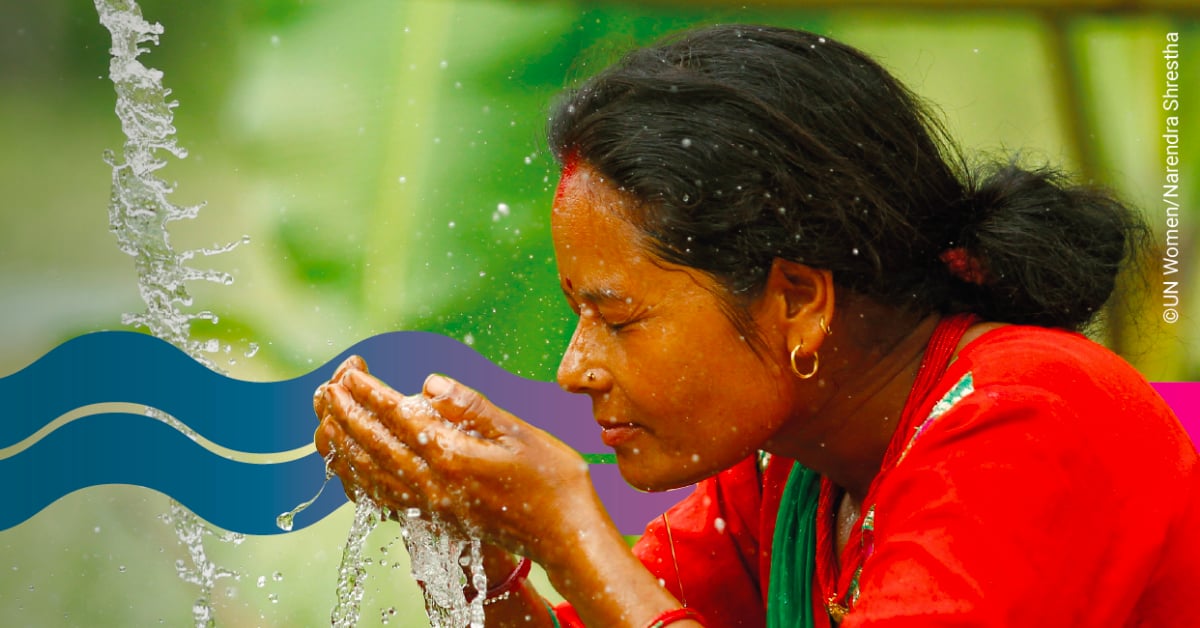
The global water crisis affects everyone – but not equally.
Every year on 22 March, World Water Day shines a spotlight on one of the key issues affecting the 2.1 billion people living without access to safe water. The theme of World Water Day 2026 is ‘Water and gender’ – a focus on how underrepresentation, funding limitations, inadequate infrastructure, gender roles, restrictive social norms, and systemic inequalities can cause women and girls to be impacted by water-related challenges.
We asked Prof Claire Walsh, Professor in Water Security, and Patsheba Ayebare, PhD Researcher in Numerical Modelling, their thoughts on why gender matters, the challenges women and girls face, and how we can change our water systems for the benefit of all.
Contents:
- Why does gender matter in the global water crisis?
- A Ugandan perspective on gender inequality across the global water crisis
Why does gender matter in the global water crisis? – Prof Claire Walsh
Prof Claire Walsh, Professor in Water Security, writes about how the water crisis disproportionately affects women and girls across the world.
Sustainable Development Goals (SDGs) 6.1 and 6.2 advocate for, ‘universal and equitable access to safe and affordable drinking water and sanitation for all, by 2030’. However, globally, 26% of the world’s population does not have access to safely manged drinking water, 42% to a safely manged sanitation service and 29% to a handwashing facility.
These water insecurities are not gender‑neutral. When water and sanitation systems fail, women and girls are disproportionately impacted by physical, social, economic and health outcomes. This highlights the strong interconnections between a number of the SDGs; solving the water crisis by addressing the current gender inequalities will also positively improve access to education, health and well-being, poverty and zero hunger targets.
Our research through the GCRF Water Security and Sustainable Development Hub, our research in Malaysia, India and Ethiopia confirmed that women and girls collect the majority of water for households where there is no reliable supply. We also explored this further through an intersectionality lens, exploring how gender inequalities interact with other social identities such as race, class and sexuality, exacerbating the challenge.
Our work highlighted underrepresentation of women in water governance; they must be included in developing solutions. Women and girls face greater risks, heavier workloads, and deeper consequences when water systems fail. Addressing the crisis effectively requires gender‑sensitive solutions that recognise and correct these inequalities.
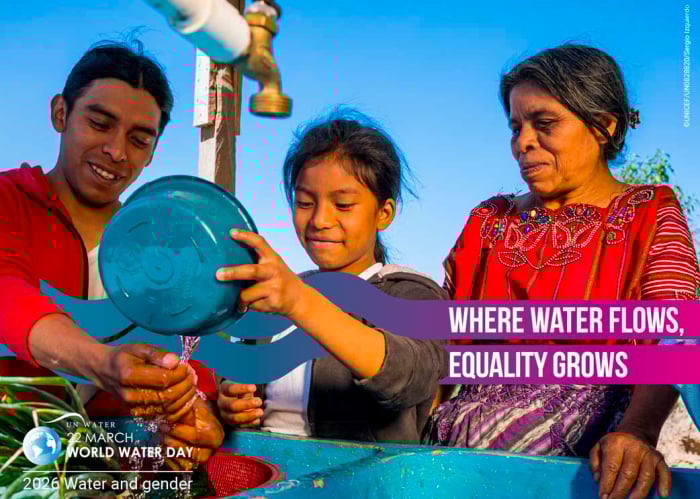
World Water Day 2026 - taking place on 22 March - shines a spotlight on water and gender inequality.
A Ugandan perspective on gender inequality across the global water crisis – Patsheba Ayebare
Patsheba Ayebare, PhD Researcher in Numerical Modelling, writes about gender inequality across the global water crisis as seen from a Ugandan perspective.
Discussions about the global water crisis often focus on infrastructure, climate change, or resource scarcity. Yet the crisis is not experienced equally. Across many parts of the world, women and girls interact with water systems more frequently than men because they are typically responsible for collecting water, managing household use, and maintaining household sanitation. As a result, they often experience the impacts of water insecurity most directly.
In Uganda, this gendered dimension of water access is particularly visible in rural communities. According to Uganda’s Water and Sanitation Sector Gender Statistics Profile (UBOS), women and girls are responsible for the majority of household water collection. When safe and reliable water sources are far away or seasonal, this responsibility can mean walking long distances several times a day to fetch water. The time spent collecting water often reduces opportunities for education, employment, and participation in community life.
From my experience working in the water sector in Uganda, another important aspect of this challenge is the lack of representation. While women play a central role in managing water at the household and community level, they are often underrepresented in technical and decision-making spaces where water infrastructure and management strategies are designed. Research on local water governance in rural Uganda has shown that social norms and institutional structures can limit women’s participation in water user committees and other decision-making bodies, despite women being the primary water users and managers.
Addressing the global water crisis, therefore, requires more than engineering solutions. Infrastructure investment remains essential, but water systems are also social systems shaped by the people who use them and manage them. Creating more inclusive water governance, with greater representation of women in engineering, policy, and community leadership, can help ensure that water solutions reflect the realities of the people who depend on them most. Recognising women not only as water users but also as decision-makers is essential for building water systems that are both resilient and equitable.
You might also like:
- find out more about our Centre for Water: a transdisciplinary centre of excellence in water research
- discover more about the Newcastle University Centres of Research Excellence (NUCoREs)
- read our World Water Day blogs from previous years
- read the blog: 'Why should we preserve glaciers?'
- uncover how our water research is helping catchments, cities, and infrastructure to be more productive, safer, and sustainable
-
read about how Newcastle University won a Queen’s Anniversary Prize for Higher and Further Education in recognition of its long-standing excellence in water research

Header image: United Nations