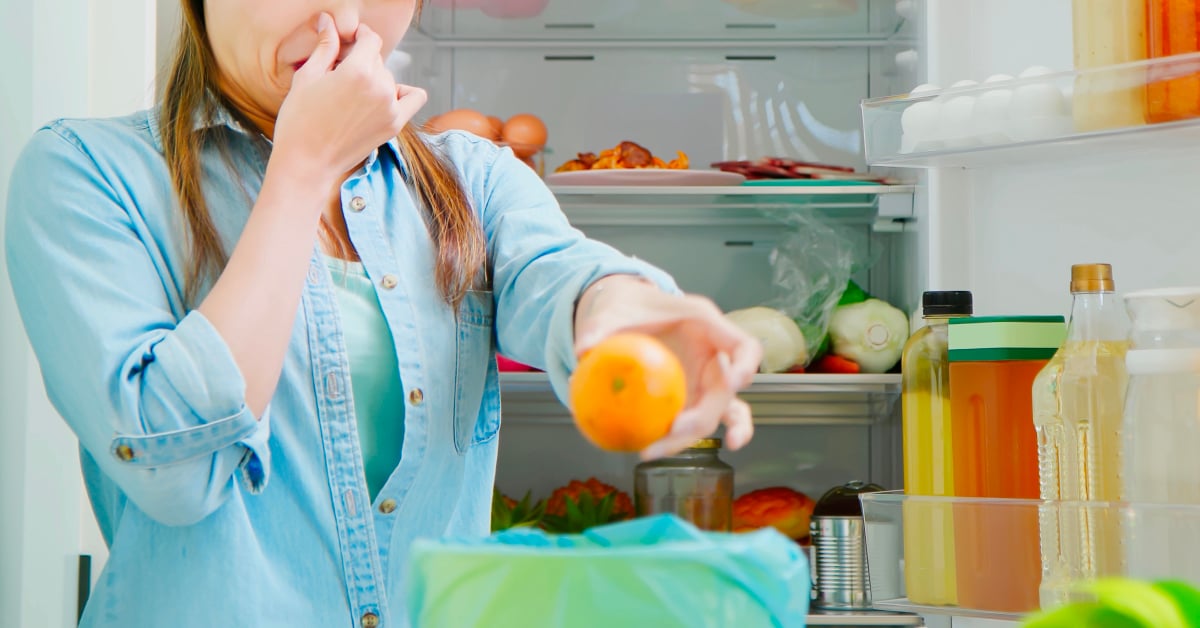
Can an 'artificial nose' in our fridges provide a cost-effective way to cut down on millions of tonnes of food waste?
A new project headed by Newcastle University researcher Dr Oktay Cetinkaya could provide a solution to the masses of edible food thrown out by households every single year. Dr Cetinkaya speaks to us about how to reduce food waste using this pioneering project.
Contents:
- What is ‘Waste-Not!’?
- How did this project come about?
- The case for food freshness detection
- How does it work?
- What is the future of 'Waste-Not!'?
What is ‘Waste-Not!’?
Waste-Not! is a sensor-enabled system designed to reduce food waste in cold storage environments, such as domestic refrigerators and commercial display fridges.
Described as an ‘artificial nose’, the Waste-Not! system combines physical and digital engineering to sense environmental changes, such as ‘odours’ released during food spoiling. This sends an alert to an app as food approaches its due date, ensuring that it is consumed before it spoils. The app will also enable geo-location-based surplus sharing, so food items that can’t be used in time can still be collected while safe and desirable to eat.
Using compact odour and environmental sensors with machine learning algorithms to estimate remaining freshness, it minimises the need for decision-making based on expiry dates or human judgement, which can be approximated or subjective.
'One of the major goals is to provide users with statistics on how much they purchase and waste (with its economical and environmental impact), thereby encouraging a behavioural change - which is key to waste less in principle.' Dr Oktay Cetinkaya
How did this project come about?
Dr Cetinkaya began by attempting to solve a universal problem: that of food waste, and the massive costs it shoulders onto society. He started by asking two key questions:
-
Why do we waste food?
-
How can we reduce food waste using technology?
According to The Waste and Resources Action Programme (WRAP), 10.7 million tonnes of food was wasted in 2021, with 73% of all food waste coming from households. It's estimated that around 4.7 million tonnes of edible food is lost through food waste, resulting in a loss of £17 billion and major carbon impacts. With 7.2 million people - including 17% of children - living in food poverty, finding a solution is vital to prevent perfectly edible food from going to waste.
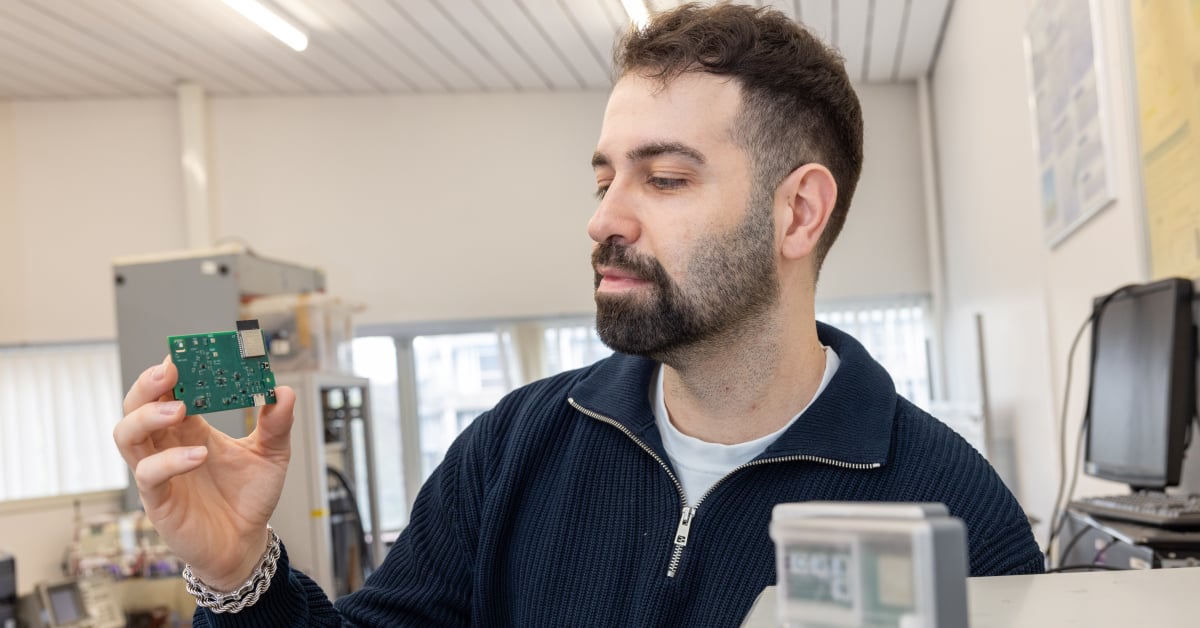
Dr Oktay Cetinkaya headed the Waste-Not! project, developing a sensor that could help reduce household food waste.
The case for food freshness detection
There is currently a gap in the market for early-stage food freshness detection. Household refrigerators provide near-ideal storage, constrained by energy and cost. However, these storage conditions that are easily influenced by user behaviour. Frequently opening refrigerator doors, for example, can cause hot air to rush in and increase the inside temperature, affecting the rate of food spoilage. Even before entering the refrigerator, the initial state of food at purchase is often unknown: food may be left out of the fridge for some time, or containers may be breached or damaged during storage, which accelerates their spoilage.
There's also the question of what to do with a surplus of food that needs to be eaten before being spoiled: is there an opportunity for surplus redistribution that will benefit all?
'Of the existing apps, none has the hardware to objectively score items in terms of their freshness, making redistributing the surplus a guessing game on edibility only,' said Dr Cetinkaya. He concluded that there was a need for affordable household food waste monitoring: a multi sensor-based system to identify key environmental factors, combined with advanced machine learning models, to estimate actual shelf life and freshness of food within a fridge.
How does it work?
The three primary features of the Waste-Not! System are the sensor, the cloud, and the app.
It begins by gathering data using an in-fridge sensor node. This measures temperature, relative humidity, gases emitted at varying stages of food spoilage (TVOC/hydrogen sulfide -H2S), and ambient light in the fridge or storage cabinet.
This data is uploaded to a cloud platform, which stores sensor data together with the user’s food-inventory records. It then consolidates this information in a freshness-assessment model, and distributes it to the Waste-Not! app.
The Waste-Not! app is to alert users as food approaches spoilage, are provided with suggestions for timely consumption, and guided towards food sharing when consumption is not possible. The app will also connect users with food banks, making their inventory visible and accessible, while integrating existing delivery networks (such as bike couriers) to streamline redistribution. Gamification features – such as leaderboards and small incentives like local discounts – and recipe suggestions will encourage participation further, fostering sustainability and maximising impact through community sharing.
'Unlike existing food-sharing or waste-reduction applications, Waste-Not! integrates sensor-informed objective freshness measurement directly into the decision-making process. This approach increases safety, reliability, and efficiency in human redistribution processes.' Dr Oktay Cetinkaya
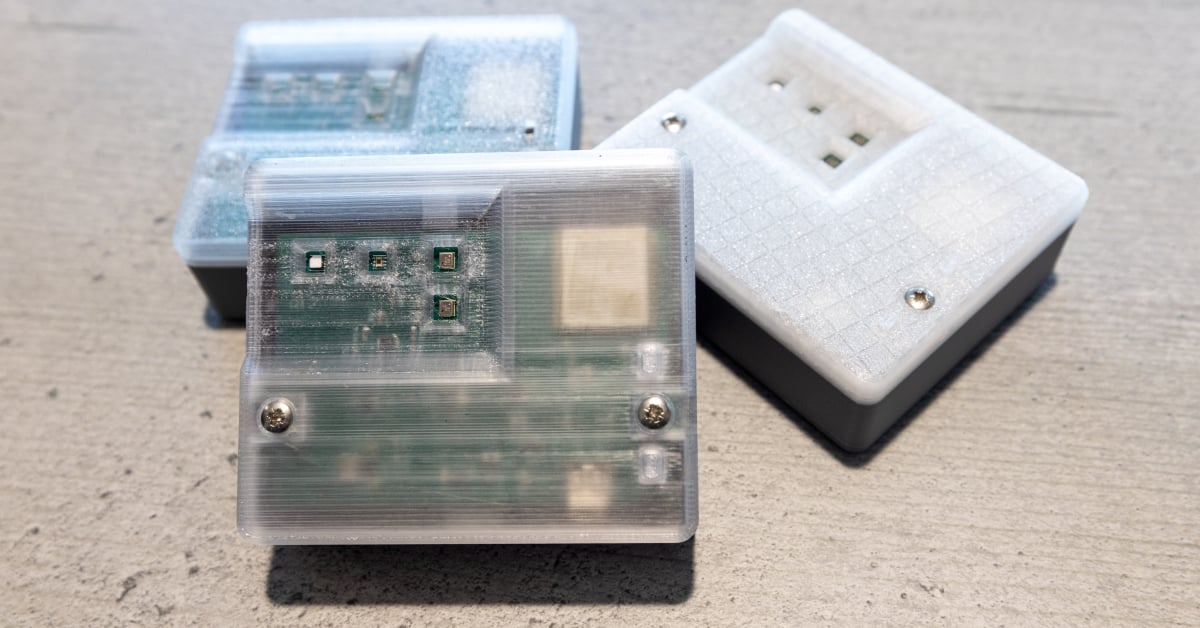
The in-fridge sensor node gathers data on temperature, relative humidity, gases emitted, and ambient light within your fridge.
What is the future of 'Waste-Not!'?
Waste-Not! has already been making waves within research communities: the project has helped Dr Cetinkaya win the Best Talk Award at the 2nd European Researchers in the UK event, the ‘Newcomer of the Year Award’ from the North East Recycling Forum, and a nomination for the Engagement and Place Awards 2026. It was also Highly Commended (Top 10%) in the 2026 Hawley Award for Engineering Innovation, awarded by the Worshipful Company of Engineers for outstanding engineering innovation delivering demonstrable environmental benefit towards Net Zero.
Waste-Not! has been designed with potential for embedding into smart appliances, or integration with existing logistics and distribution networks. It is currently in use in the field as a working prototype and is transitioning from pilot deployments to larger-scale trials involving households, commercial establishments, and community settings.
'By linking behavioural insights with measured reductions in waste, emissions and disposal frequency, the project will generate one of the most comprehensive regional datasets to inform future waste-reduction policies and community food initiatives.' Dr Oktay Cetinkaya
Trials for Waste-Not! are still ongoing, and are migrating to real-world testing. Subject to further funding, Dr Cetinkaya’s next goal is to improve the Waste-Not! app, add more features, and to develop a sensor to detect mould and damp in homes.
Dr Cetinkaya is actively looking for collaborators and researchers to work with and help spread awareness about the project. If you are interested or have any questions about Waste-Not!, please contact Dr Cetinkaya at oktay.cetinkaya@ncl.ac.uk.
You might also like:
- read the press release: 'The artificial nose helping sniff out food waste'
- learn more about the researchers involved in this project:
- Dr Oktay Cetinkaya, Lecturer in Sensor Systems
- Dr Boyuan Zhao, Research Associate in Sensor Systems
- discover more research projects by Dr Cetinkaya
- read more about the Eat It Up Fund, which fuels innovations that reduce edible food waste
- find out how our Intelligent Sensing and Communications (ISC) group is developing real world solutions for communications, sensing, and signal processing
- explore research from our School of Engineering
