
Are your fitness gadgets having a negative effect on your life?
Recent research shows that fitness technologies - with their embedded design of quantification, gamification, and socialisation - may unintentionally be undermining your psychological, behavioural, and social wellbeing.
Haiyan Chen, a PhD graduate from Newcastle University Business School, writes about her recent research into fitness-related self-service technologies and the aspects of its development that needs to change.
Contents:
- Re-examining our relationship with fitness technologies
- Psychological cost – when attention becomes anxiety
- Behaviour disorder – when motivation becomes obsession
- Social disconnection – when connection becomes comparison
- Taking a closer look: mechanisms and insights
Re-examining our relationship with fitness technologies
As we move into a new year, people are still hoping to keep their health-related resolutions alive for as long as they can, leading to a new wave of fitness trends and an increasing demand for fitness technologies.
Fitness technologies, such as health apps and wearable activity trackers, enable consumers to track, analyse, and reflect on data of personal metrics, such as step counts, heart rate, sleep quality, and more. With the rising popularity of these fitness technologies, we increasingly depend on wearable devices and smartphone apps to monitor progress, set goals, and share achievements.
Have you ever felt anxious because you failed to close your activity rings? Have you ever forced yourself to exercise just to compensate for an unplanned meal? Have you ever felt an invisible pressure from seeing your friends’ exercise records?
News stories and research suggest that these experiences are not isolated cases. We need to rethink our relationship with these fitness technologies. Are they helping us get healthier, or secretly harming us?
Our research, published in the Journal of Public Policy and Marketing, comprehensively discloses the potential negative impacts of fitness technologies on consumers’ psychology, behaviour and social relationships through systematically synthesising the findings from existing research. Our work offers novel insights into how these negative outcomes occur and how user-related factors such as user psychology, motivation, and characteristics, shape the relationships between fitness technologies and consumer wellbeing. With these findings, our work also suggests directions for future research and discusses how fitness technologies can be designed, marketed, and used more wisely.
Psychological cost – when attention becomes anxiety
People have found that the personal metric tracking they engage in for health or fitness purposes has instead become a persistent source of stress.
Our research reveals that using fitness technologies is associated with negative emotions such as anxiety, body dissatisfaction, and even rumination (e.g., Constantiou et al. 2023; Eikey et al. 2021; Taylor and Dibb 2022).
We also found that these negative emotions and cognitions are the negative psychological reactions that arise from the features and designs of fitness technologies — such as feedback systems, goal-setting functions, and gamified or social elements. For instance, unmet goals or negative feedback can make consumers feel anxious and guilty, while comparative aspects of these technologies are associated with stress (e.g., Constantiou et al. 2023; Goodyear, Kerner, and Quennerstedt 2019; Morgan-Jones et al. 2022).
This points to a paradoxical phenomenon: the technologies that were supposed to promote attention to health end up driving people to focus solely on cold, numerical goals, thereby imposing psychological burdens and ultimately undermining people’s psychological wellbeing.
Behaviour disorder – when motivation becomes obsession
Beyond affecting how people feel, fitness technologies may also change how people behave.
Driven by the desire to reach specific numerical targets, sometimes the purpose of exercise is no longer to gain physical and mental pleasure, but transforms into an obsession, which in turn leads to unhealthy exercise or compensatory behaviours.
Empirical evidence also indicates that using wearable devices or health apps is associated with extreme compensatory behaviours, disordered eating, or excessive exercise (e.g., Hahn et al. 2022; Wons et al. 2022).
These undesirable behavioural patterns are often triggered by the negative psychological reactions that arise from using fitness technologies. For example, to ease the guilt or anxiety caused by unmet goals or poor performance, users may engage in excessive exercise or extreme dieting (e.g., Eikey et al. 2021; Goodyear, Kerner, and Quennerstedt 2019; McCaig et al. 2020). At this point, people are no longer exercising to feel good, but to make their data look right. This kind of obsession may end up harming people’s behavioural wellbeing.
Social disconnection – when connection becomes comparison
Ranking systems and data-sharing features in fitness technologies are supposed to help people gain social recognition and support. However, they may trigger silent competitions instead. People’s excessive pursuit of desired personal ranking or data may undermine their social relationships and lives.
For instance, existing research found that being obsessed with tracking and controlling calorie intake has occupied people’s time and energy that otherwise might be spent on social interactions with family and peers, negatively influencing their social lives and even leading to social isolation (e.g., Honary et al. 2019).
In the end, this may undermine the most valuable aspects of a community – support and acceptance – deepening individuals’ feelings of loneliness and disconnection, and in turn harming people’s social wellbeing.
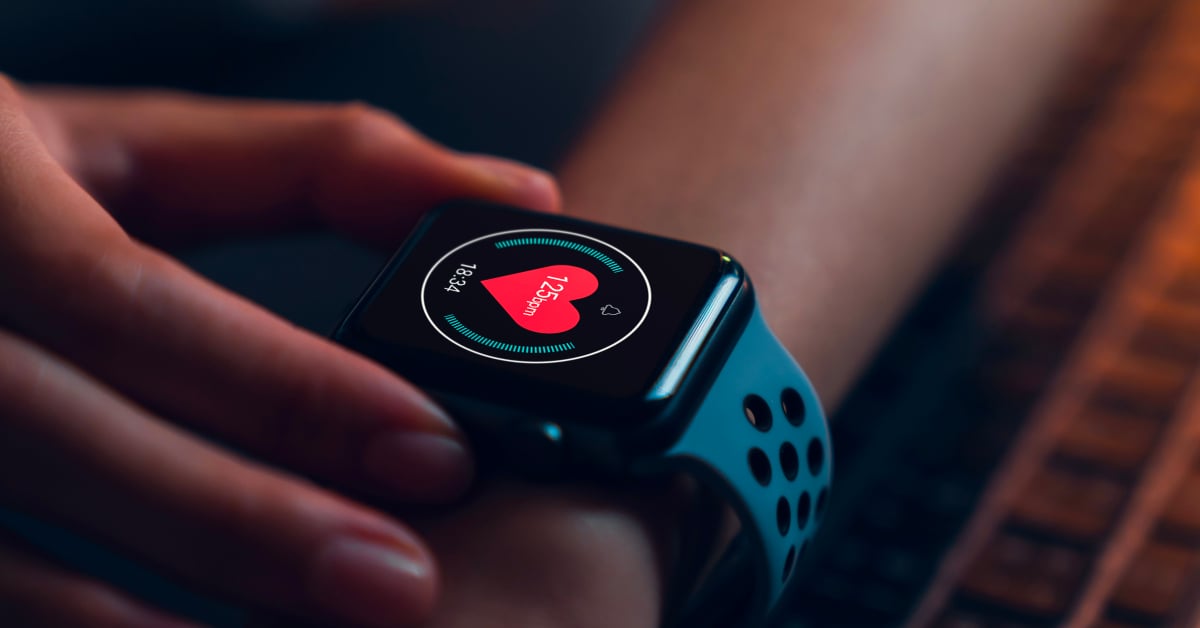
The quantification, gamification, and socialisation of fitness technology can have a detrimental effect on your wellbeing.
Taking a closer look: mechanisms and insights
Our study reveals the dark side of fitness technologies and the core mechanism behind it. That is, some features of these technologies can first trigger or intensify people’s negative psychological reactions — both emotional and cognitive — which may then turn into unintended harms to psychological, behavioural, and social wellbeing.
Notably, not everyone experiences these effects in the same way. Individuals’ differences in personality, motivations, and psychological tendencies can make a big difference in how they’re affected. I write about this more deeply in the full article.
As such, our work offers insights for different audiences, with the intention that the development, marketing, and usage of these technologies is done with consideration and care.
For researchers
For researchers, we have identified the key pathway from ‘technology features/design → psychological reactions → adverse outcomes’ and highlighted the potential mediating and moderating role of individual differences.
Testing these proposed mechanisms could be a valuable direction for future research, potentially informing the development of effective interventions to mitigate the negative effects of fitness technologies. In addition, the actual role and specific boundaries of the potential mediating and moderating factors warrant further in-depth exploration.
For marketers
For marketers, we recommend regularly investigating and analysing consumer experiences in order for developers and designers to continuously optimise product designs and provide appropriate support systems for users.
By understanding users’ actual experiences, developers can identify design elements that are most likely to lead to negative outcomes and make improvements accordingly. In addition, marketing teams should develop supportive information systems that provide relevant health knowledge and guidance, helping consumers manage potential risks associated with using their fitness technologies.
For users of fitness technologies
For general users, we hope that this research encourages them to reflect and establish healthier values. We aim for users to realise that fitness technologies are tools for supporting and improving health, rather than the standard by which they measure themselves.
Critically evaluate the data the technology provides and always maintain your autonomy – you should be the master of your body, not a servant of the data.
Ultimately, the key is to build a healthy and balanced relationship with fitness technologies – one that truly serves our wellbeing.
This blog post is based on a peer-reviewed journal article from Dr Haiyan Chen’s doctoral thesis, co-authored with her supervisors, Prof Klaus Schoefer, Prof Danae Manika, and Dr Effy Tzemou.
You might also like
- read the full study: The “Dark Side” of General Health and Fitness-Related Self-Service Technologies: A Systematic Review of the Literature and Directions for Future Research. Journal of Public Policy & Marketing, (2024) 43(2), 151-170. https://doi.org/10.1177/07439156231224731
- find out more about the author, Haiyan Chen, a recent PhD graduate from Newcastle University Business School
- explore more research from the Newcastle University Business School

References:
Constantiou Ioanna, Mukkamala Alivelu, Sjöklint Mimmi, Trier Matthias (2023), “Engaging with Self-Tracking Applications: How Do Users Respond to Their Performance Data?” European Journal of Information Systems, 32 (6), 941–61.
Eikey Elizabeth Victoria, Caldeira Clara Marques, Figueiredo Mayara Costa, Chen Yunan, Borelli Jessica L., Mazmanian Melissa, Zheng Kai (2021), “Beyond Self-Reflection: Introducing the Concept of Rumination in Personal Informatics,” Personal and Ubiquitous Computing, 25 (3), 601–16.
Goodyear Victoria A., Kerner Charlotte, Quennerstedt Mikael (2019), “Young People's Uses of Wearable Healthy Lifestyle Technologies; Surveillance, Self-Surveillance and Resistance,” Sport, Education and Society, 24 (3), 212–25.
Hahn Samantha L., Hazzard Vivienne M., Loth Katie A., Larson Nicole, Klein Laura, Neumark-Sztainer Dianne (2022), “Using Apps to Self-Monitor Diet and Physical Activity Is Linked to Greater Use of Disordered Eating Behaviors Among Emerging Adults,” Preventive Medicine, 155, 106967.
Honary Mahsa, Bell Beth T., Clinch Sarah, Wild Sarah E., McNaney Roisin (2019), “Understanding the Role of Healthy Eating and Fitness Mobile Apps in the Formation of Maladaptive Eating and Exercise Behaviors in Young People,” JMIR mHealth and uHealth, 7 (6), E14239.
McCaig Duncan, Elliott Mark T., Prnjak Katarina, Walasek Lukasz, Meyer Caroline (2020), “Engagement with MyFitnessPal in Eating Disorders: Qualitative Insights from Online Forums,” International Journal of Eating Disorders, 53 (3), 404–11.
Morgan-Jones Philippa, Jones Annabel, Busse Monica, Mills Laura, Pallmann Philip, Drew Cheney, Arnesen Astri, Wood Fiona (2022), “Monitoring and Managing Lifestyle Behaviors Using Wearable Activity Trackers: Mixed Methods Study of Views from the Huntington Disease Community,” JMIR Formative Research, 6 (6), e36870.
Taylor Lauren, Dibb Bridget (2022), “Exploring Users and Non-Users Views of the Digital Twin on a mHealth App: A Thematic, Qualitative Approach,” Cogent Psychology, 9 (1), 2079802.
Wons Olivia, Lampe Elizabeth, Patarinski Anna Gabrielle, Schaumberg Katherine, Butryn Meghan, Juarascio Adrienne (2022), “Perceived Influence of Wearable Fitness Trackers on Eating Disorder Symptoms in a Clinical Transdiagnostic Binge Eating and Restrictive Eating Sample,” Eating and Weight Disorders, 27 (8), 3367–77.