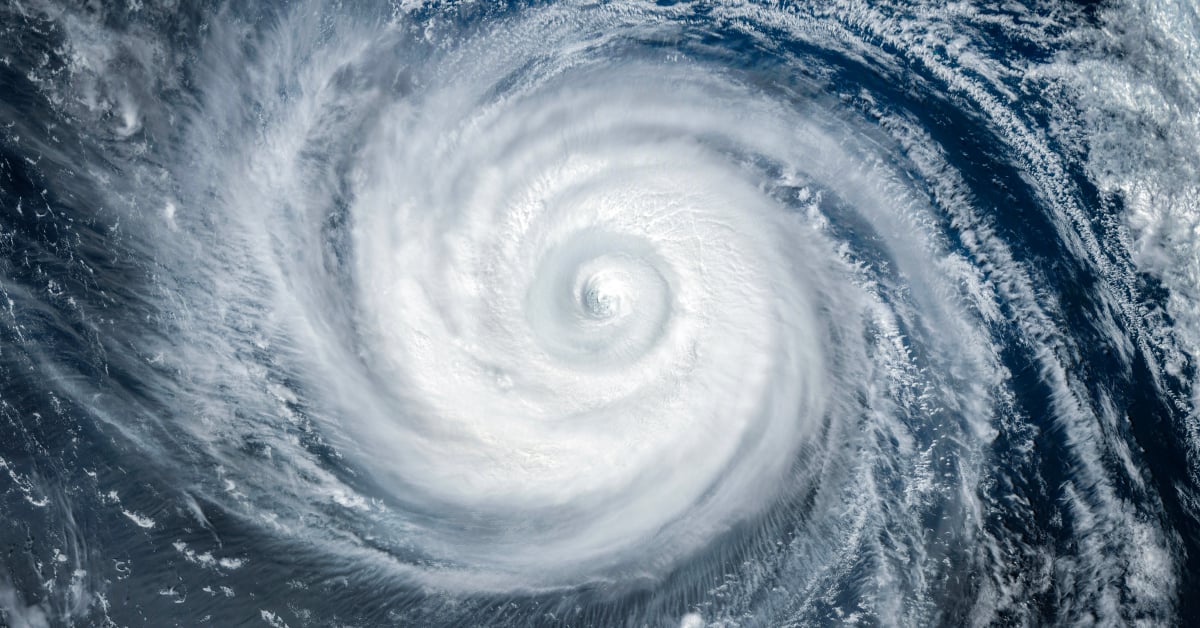
Since the 1970s, tropical cyclones in the North Atlantic have become more common, as have their devastating side-effects such as flash flooding.
A study led by Dr Haider Ali, Senior Research Associate at Newcastle University’s School of Engineering, has used satellite data to examine the impact of temperature changes on North Atlantic tropical cyclones. Read on to find out more.
Contents:
- What is a tropical cyclone?
- Identifying variables when measuring cyclones
- A more accurate measure of storm size
What is a tropical cyclone?
A tropical cyclone is a rapidly rotating storm system that appears over tropical oceans. The term encompasses different types of storms – such as hurricanes, typhoons, and tropical depressions – depending on its location and strength.
Tropical cyclones are often responsible for extreme precipitation – which encompasses rainfall, hail, snow, and other atmospheric water vapour – in subtropical and tropical regions. In the North Atlantic, tropical cyclones contribute substantially to the hydrological hazards associated with heavy rain such as flash flooding, and can account for as much as 30-40% of regional precipitation during the peak hurricane season between August and October.
'Improving our understanding of the temperature sensitivity of tropical cyclone precipitation in the North Atlantic is essential for both current hazard assessment and long-term climate adaptation planning.’ Dr Haider Ali, Senior Research Associate at Newcastle University
Identifying variables when measuring cyclones
Studies have shown that North Atlantic hurricanes are shifting poleward, increasing in intensity, and undergoing structural changes as the climate warms. However, how cyclone-induced precipitation responds to changing conditions remains uncertain. This is what authors Dr Haider Ali and Prof Hayley Fowler aimed to investigate in their study: ‘Warmer temperatures lead to wetter tropical cyclones in the North Atlantic’.
According to a previously-used framework, there is an approximate 6–7% increase in atmospheric moisture-holding capacity for every degree of warming. However, both this rate of increase can be inconsistent and influenced by additional factors, including:
- differences in moisture availability
- intermittent and episodic precipitation
- seasonal variations in temperature
- distinctions between convective and stratiform precipitation
- structural changes in cyclone circulations
- storm dynamics
- large-scale atmospheric circulation patterns
Measuring temperature
The study aimed to compare how temperature variables contribute to cyclone-induced precipitation extremes under the warming climate.
Selecting the right temperature variable was critical to the study. The types of temperature variables included:
- near-surface air temperature: though widely used, inadequately represents the combined effects of temperature and humidity in the tropical environments where tropical cyclones typically form and intensify
- sea surface temperature: a useful metric for precipitation-temperature scaling, though shallow thermoclines and low ocean heat content cause stronger mixing and faster surface cooling that weakens the estimated scaling rates
- dewpoint temperature: offers a more direct estimate of near-surface moisture content, while sea surface temperature is related to the underlying oceanic heat reservoir that drives latent heat fluxes and cyclone intensification
One variable not previously used in tropical cyclone-induced precipitation scaling analyses was surface equivalent potential temperature: this provided a more physically grounded metric of moist static energy and convective potential by incorporating both near-surface air temperature and specific humidity. For this study, it was decided to integrate surface equivalent potential temperature with the conventional variables to provide a more comprehensive assessment.
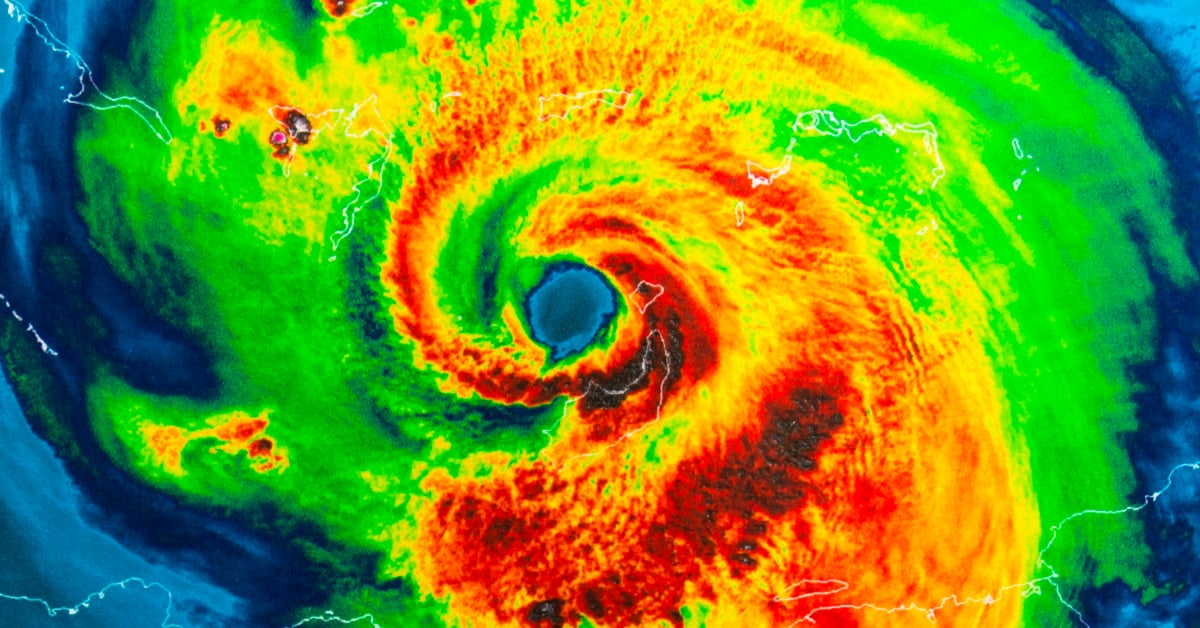
Different methods of measurement were used to more accurately predict the behaviour of tropical and post-tropical cyclones.
Measuring precipitation
Traditional methods of measuring cyclone-induced precipitation do not account for the dynamic nature of storm size and structure, which can evolve significantly over a cyclone’s lifespan. To address this limitation, previous studies have defined the storm radius as the maximum distance from the centre. This method assumes that storms with larger wind footprints also produce broader precipitation areas: a relationship that holds for tropical cyclones but can weaken once systems become post-tropical.
The team decided a wind-based metric would be more appropriate, which led to the development of a new wind-based radius metric specifically for this work. This focuses on heavy rainfall within this area rather than total rainfall to account for the asymmetric post-tropical cyclone phase, and links it directly to the storm’s evolving structure. This newly proposed, physically grounded method examines how temperature influences heavy rainfall from the tropical to post-tropical phases of cyclones.
Measuring dynamic cyclone size
Cyclone size is a key factor when considering precipitation impacts. Larger storms tend to expose affected regions to prolonged periods of intense rain and strong winds, increasing the overall risk of hazards. To understand the impact of cyclone-induced precipitation, the team examined both the tropical cyclone-phase and the post-tropical cyclone phase following the extra-tropical transition.
Extra-tropical transition marks a structural and dynamical shift in a cyclone’s lifecycle, during which the system evolves from a symmetric, warm-core tropical structure into an asymmetric, predominantly cold-core extra-tropical cyclone. In the North Atlantic, around 42% of tropical cyclones undergo extratropical transition. Over half of these systems experience re-intensification, marked by a further drop in central pressure. This transformation often leads to increased flood risks for coastal regions such as the eastern United States.
To more accurately capture storm-specific rainfall characteristics, the research team adopted a dynamic-radius framework that adapts to the changing storm structure. High-resolution satellite precipitation data, combined with storm tracking data from the IBTrACS, was used to interpret key rainfall metrics. The team examined how these metrics vary with temperature, addressing three specific research questions:
- How does heavy precipitation associated with North Atlantic tropical cyclone scale with different surface temperature variables?
- How do these scaling relationships differ between the tropical cyclone and post-tropical cyclone phases?
- How do spatial precipitation metrics vary with temperature in both the tropical and post-tropical phases, and what do these changes reveal about the evolving precipitation structure of cyclones?
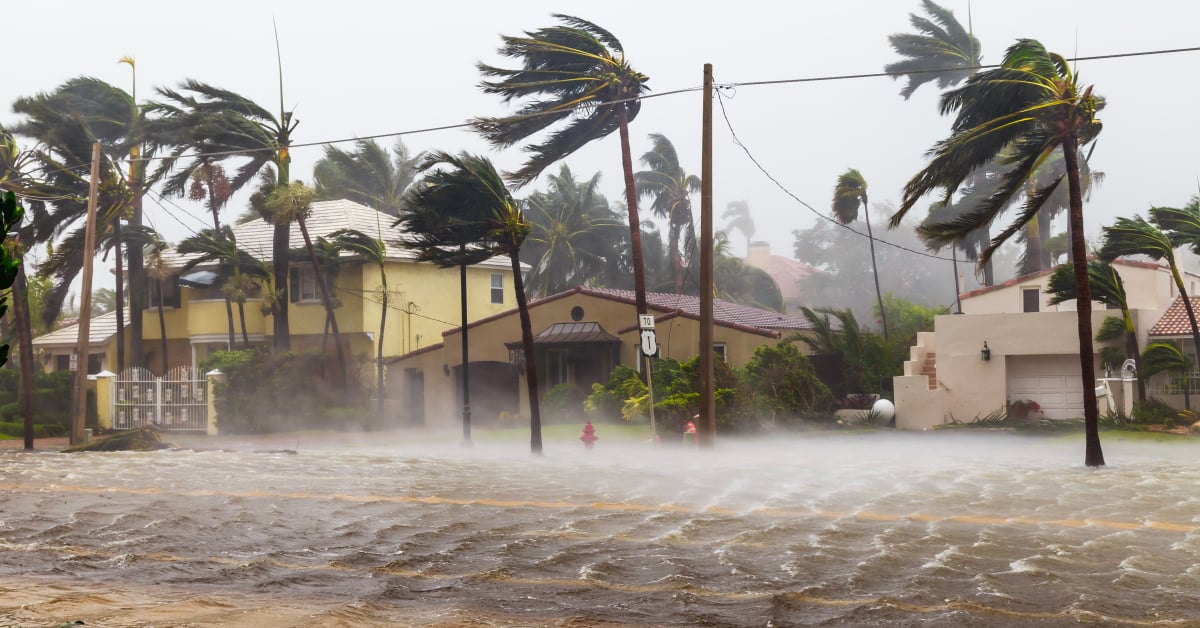
Flash floods resulting from a tropical cyclone can be devastating to communities living in the North Atlantic.
A more accurate measure of storm size
By combining a dynamic-radius methodology with multi-variable temperature analysis, this study provided new insights into the intensity and distribution of tropical cyclone-induced rainfall in a warming climate.
The findings of the study demonstrated that structural and precipitation characteristics of tropical cyclones and their post-tropical counterparts respond distinctly to temperature conditions. They found that tropical cyclones are generally more compact, whereas storms expand in size substantially after extratropical transition to post-tropical cyclones. By using a wind-based radius, the team provided a more physically consistent and time-resolved measure of storm size, allowing for a greater understanding of how tropical and post-tropical cyclones may respond to rising temperatures in the future. Our researchers concluded that it is crucial to study the temperature scaling of cyclone-induced rainfall separately during different cyclone phases, and to treat them differently in climate impact assessments.
'The results of this study highlight the need to consider cyclone phase, structural evolution, translational speed, and latitude-dependent thermodynamic context when evaluating rainfall–temperature relationships.' Dr Haider Ali
Existing observational records have already shown that tropical cyclones undergoing extratropical transition in the North Atlantic have become more common since the 1970s. Future projections suggest even more frequent and intense events, which could include up to 30% increase in rainfall during the post-tropical cyclone phase. This phase-specific approach would allow for a more accurate assessment of the factors that shape rainfall patterns throughout the full lifecycle of transitioning cyclones in the North Atlantic in a changing climate.
You might also like:
- read the study: Ali, H., Fowler, H. J., Reed, K. & Prein, A. F. (2026). Warmer temperatures lead to wetter tropical cyclones in the North Atlantic. npj Climate and Atmospheric Science. https://doi.org/10.1038/s41612-026-01363-2
- read the press release: 'Warming intensifies rainfall in North Atlantic storms'
- learn more about the researchers involved in this study:
- Dr Haider Ali, Senior Research Associate at Newcastle University’s School of Engineering
- Prof Hayley Fowler, Professor of Climate Change Impacts
- discover how research at our School of Engineering is providing sustainable solutions to global challenges
