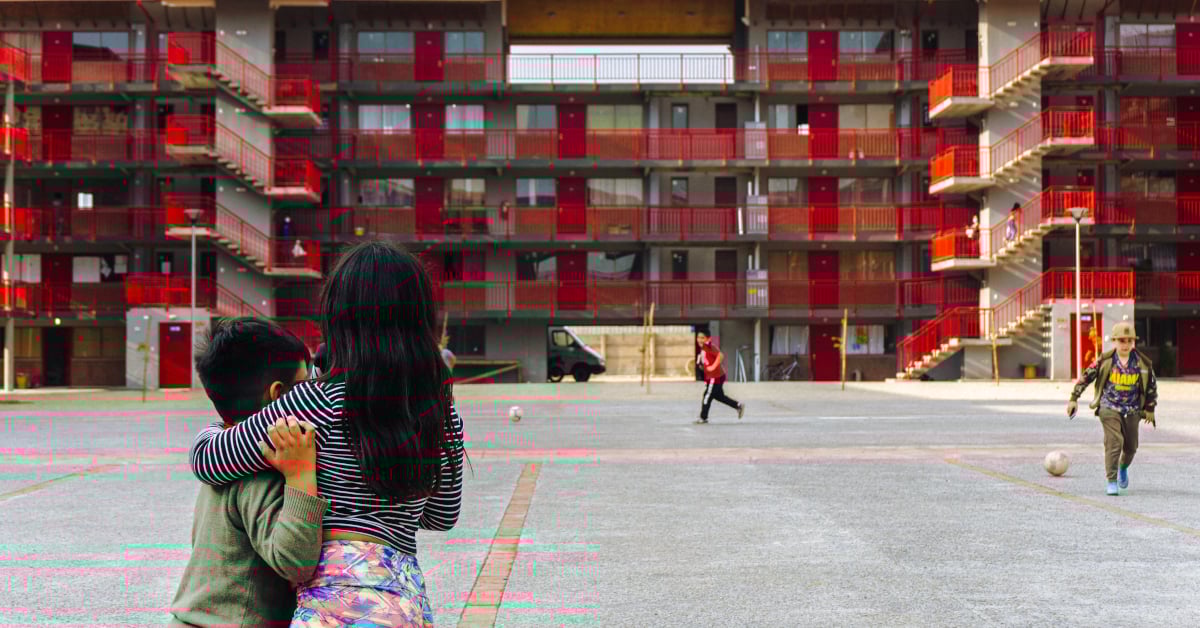
What happens when communities take the lead in shaping their cities?
A new project is using digital storytelling to highlight inequalities in urban development. Dr Gabriel Silvestre from our School of Architecture, Planning & Landscape speaks to us about the project, and how it shows the creativity and resilience of communities resisting displacement.
Contents:
- Restoring trust in planning models
- Challenging conventional approaches to urban development
- Urban Prefigurations: building the future in the present
- From research to digital storytelling
- A Place in the City: documentary as research dissemination
- Why it matters
Restoring trust in planning models
Despite decades of efforts to promote participatory approaches in urban development, global inequalities between cities have continued to deepen. Many policies fail to tackle the structural roots of exclusion, eroding public trust in conventional planning models.
Over the past decade - often described as the 'Decade of Protests' - Europe and the Americas witnessed widespread demonstrations sparked by perceptions of declining urban living conditions, particularly in housing, mobility, public services, and safety. Persistent spatial segregation, chronic underinvestment in infrastructure, rising living costs - especially for housing - and the growing disconnect between political elites and everyday urban realities have fuelled widespread distrust in representative politics.
Challenging conventional approaches to urban development
In response, new grassroots approaches are emerging that investigate community-led planning as a transformative practice. Research is supported by greater access to knowledge, tools, and transnational networks, and demonstrates how public policies can be designed and implemented differently.
Conducted within the framework of the Contested Territories project - an international initiative funded by the EU Horizon 2020 Marie Skłodowska-Curie Actions - the study explores how grassroots initiatives across Latin America redefine the politics of space, participation, and urban justice. The project brings together academic and civil society partners from Europe and Latin America to examine bottom-up models of territorial development.
'Spaces designed and implemented by communities tend to thrive.' Dr Gabriel Silvestre, Senior Lecturer in Urban Planning
Urban Prefigurations: building the future in the present
The Urban Prefigurations (Urbanpref) project emerged from this collaboration, involving Newcastle University, the University of Buenos Aires, the University of Chile, and Fundación Ciudades sin Miedo.
Rooted in the concept of prefigurative politics, the project promotes the ‘right to the city’ through inclusive, democratic, and community-led practices. It led to the creation of urbanpref.com: a digital platform that serves as a hub for sharing knowledge and practices from grassroots urban movements.
From research to digital storytelling
Urbanpref features case studies and multimedia content that highlight the creativity and resilience of urban communities resisting displacement.
To bring these stories to life, the web series Community-led Planning was produced: an eight-part collection of short films documenting local struggles and innovations in Argentina, Brazil and Chile. Episodes explore themes such as halting evictions, co-producing neighbourhoods, dignified housing, and the social function of property. These films were developed with activists, planners, and residents, offering a view into the reality of urban transformation.
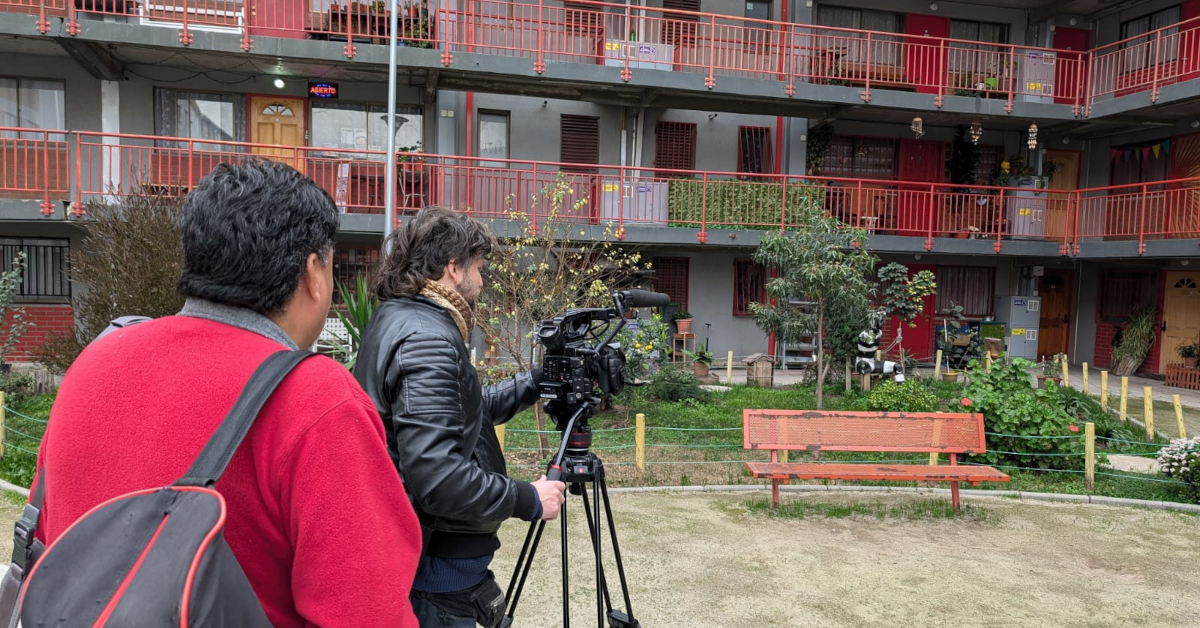
Film crew at Ukamau Housing Estate. Credit: Gabriel Silvestre.
A Place in the City: documentary as research dissemination
The feature-length documentary A Place in the City expands on these themes, weaving together archival footage, academic commentary, and community testimonies. It examines how communities in Rosario, Santiago de Chile, and Belo Horizonte respond to urban inequality through grassroots planning and collective action. Co-produced with Fundación Ciudades sin Miedo, the film premiered in Rosario in August 2025 and has since been screened in eight countries at community and cultural centres as well as universities.
Why it matters
Community-led planning enables communities to play an active role in shaping their environments. Evidence from the Urban Prefigurations project shows that when communities are empowered and have autonomy, they contribute to more effective implementation of public policies, particularly in areas such as social housing and infrastructure. This approach fosters social innovation, as communities and their networks of supporters often think beyond the limitations of conventional policy frameworks.
Community-led planning also enhances a sense of ownership and belonging. Spaces designed and implemented by communities tend to thrive, fostering communal relations that support and maintain those spaces and institutions. Moreover, it strengthens democratic politics by encouraging civic engagement and promoting more inclusive relationships between state and society.
Finally, it encourages solidarity, as communities frequently collaborate with others to share their experiences and innovative practices.
You might also like
- learn more about Dr Gabriel Silvestre, Senior Lecturer in Urban Planning, Newcastle University
- visit the Urbanpref platform
- watch the Urbanpref web series
- learn about the documentary, A Place in the City
- explore the research from our School of Architecture, Planning & Landscape
- find out how we’re developing innovative solutions to expand social and economic opportunities, for a better quality of life for all

Header image credit: Esteban Burgos